Washing machine leaking in Meridian: what to do about the water damage
A puddle by the washing machine is only the water you can see. Here is what a washing machine leak does to your laundry room, what to do first, and when the floor and walls need drying help.
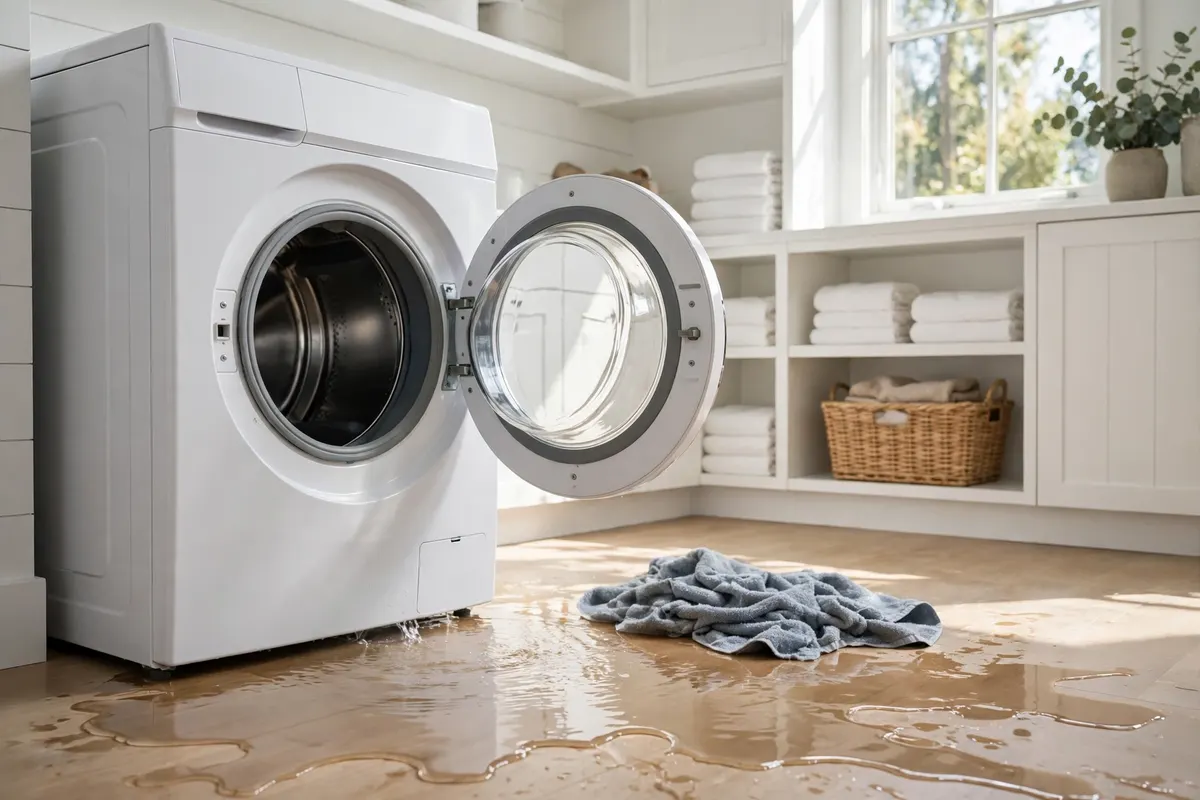
You start a load of laundry, walk away, and come back to a wet sock. Or you open the laundry room door in the morning and find a puddle spreading across the floor, with no obvious spill anywhere. A washing machine leak rarely looks dramatic at first — a thin line of water along the baseboard, a damp patch that dries and comes back, a floorboard that feels a little soft near the machine. The instinct is to mop it up, run the machine again to see if it happens twice, and move on. That instinct is understandable, and it is also the reason a small washing machine leak turns into swollen baseboards, a ruined subfloor, and a musty smell that will not go away. The puddle you can see is only the water that escaped. The water that matters is the water that stayed — behind the machine, under the flooring, inside the wall base, and in the ceiling of the room below. This guide explains what a washing machine leak does to a Meridian laundry room, what to do in the first hour, how to find the hidden water, and when the laundry room needs drying help before any repair — so the fix you make is the fix that lasts. The full water damage restoration in Meridian process starts the same way: stop the water, dry what is wet, and only then rebuild.
Washing machines sit hard against the wall, and that is exactly why their leaks hide so well. The machine is pushed back into a corner or a closet, with the supply hoses and the drain hose running behind it where you cannot see them, and the wall hiding everything above the floor. A slow drip from a hose connection can run for weeks before anyone sees water on the open floor, because the water soaks into the wall base and the subfloor first, and only spreads out onto the visible floor once everything behind the machine is already wet. By the time a puddle shows, the damage has usually been going on longer than the puddle suggests. That does not mean every washing machine leak is a disaster. A small, clean-water spill caught the same day, on a hard floor, with dry walls underneath, is a mop-up job. The work is telling the two apart — a spill you can clean up yourself, and a leak that has already reached the structure of the laundry room. The sections below walk through that in order.
The short answer: what a washing machine leak does to your laundry room
A washing machine leak sends water where a laundry room is least able to handle it: under the flooring, into the wall base, and down into the subfloor — and, when the laundry room is upstairs, through the ceiling of the room below. Washing machine water is not just tap water sitting on a surface. It runs behind the machine and under the floor, wicks up into drywall and baseboards, and sits in a closed, dark space where it dries very slowly. Here is the short version of what to do:
- Stop the machine and shut off its water. Cancel the cycle, then close both wall valves behind the machine — hot and cold. Do not run another load to see if it leaks again.
- Cut the power if water is near an outlet or the machine plug. Switch off the laundry circuit at the breaker panel and leave it off until the area has been checked. Never stand in water to reach a panel or an outlet.
- Mop up the water you can see, then look for the water you cannot. Check the wall behind the machine, the baseboards, the floor under the machine, and the ceiling of the room below if the laundry room is upstairs.
- Do not push the machine back and forget about it. The space behind and under the machine holds water long after the open floor looks dry.
- Call for drying help when the floor is soft, the baseboards are swollen, or there is a musty smell. Those are the signs the job has moved past a mop-up.
Most washing machine leaks fall into one of three outcomes: a quick cleanup for a small spill caught the same day; a drying job for a leak that reached the wall base or the subfloor; or a repair job where flooring, baseboards, or drywall have to come out before the laundry room can be put back. The rest of this guide helps you work out which one yours is.
Why washing machine leaks hide for so long
A washing machine leak hides because the machine is pushed against the wall, and because most leaks are slow. A fast flood is obvious — water across the whole laundry room floor in minutes. A slow drip is not. It runs a little with every load, soaks into the wall base and the subfloor a little at a time, and the open floor stays dry until the material behind the machine is saturated. That is why the first sign is often not water at all: it is a baseboard that has swollen, paint that is bubbling near the floor, a musty smell when you open the laundry room door, or a floorboard that has started to cup near the machine. Three parts of the machine cause most leaks, and each one leaves a different trail — and when the machine leaks tells you which part it is.
The supply hoses and the wall valves
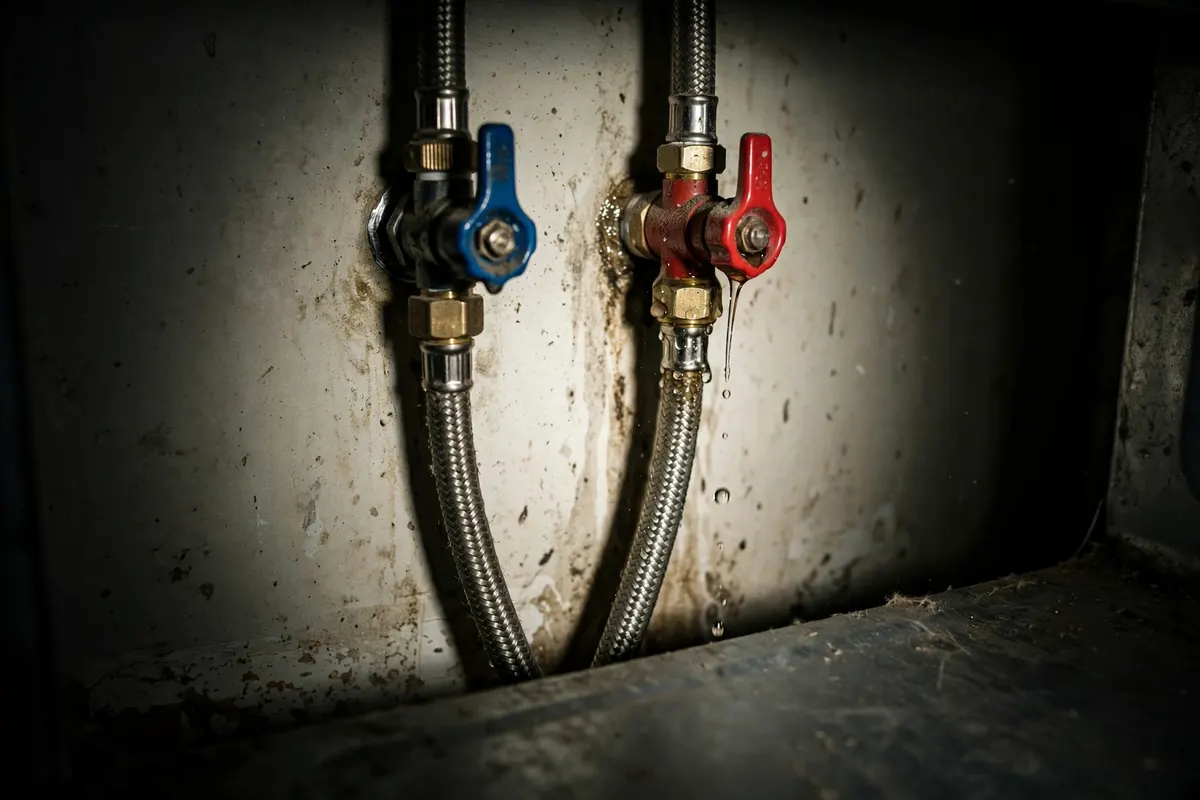
The washing machine is fed by two supply hoses, hot and cold, connected to wall valves behind the machine, and both stay under pressure the whole time the valves are open. A hose connection that has worked loose drips clean water every time the machine fills, and because the line is under pressure, even a small drip adds up over days of loads. Rubber hoses wear with age — they bulge, crack, and soften at the connections — and a hose that has been in place for years is the most common source of a slow leak. Braided steel hoses hold up longer, but their connections can still work loose. Both kinds of leak run down the wall behind the machine and under the floor, which is why the first wet spot often shows up a foot or two away from the machine itself, or in the room below. If the floor is wet near the machine but the machine looks dry from the front, the hoses behind it are the first place to check — and the two wall valves behind the machine are where you stop it.
The door gasket and the tub
On a front-load machine, the rubber gasket around the door keeps wash water inside the drum, and it wears out over time. Coins, hair, and grit caught in the gasket hold the seal open, the rubber tears or flattens, and water starts escaping at the bottom of the door during the wash. A gasket leak usually shows as a thin line of water on the floor right in front of the machine, and it often stops between loads because it only leaks while the machine is running. That makes it easy to dismiss — the floor dries, the next load wets it again, and the baseboard soaks a little more each time. A gasket that is visibly torn, flattened, or pulling away from the door needs replacing, and until it is replaced the leak will keep wetting the same strip of floor and baseboard. On a top-load machine, the same kind of leak comes from the tub seal, which lets water out during the wash or the spin, and runs down under the machine where it is hardest to see.
The drain hose and the standpipe
A washing machine that cannot drain properly will push water out at the drain hose or back up the standpipe, and the overflow runs onto the floor. The usual causes are a kinked drain hose, a drain hose that has slipped out of the standpipe, or a standpipe that backs up when the household drain is slow. This kind of leak happens during the drain or spin part of the cycle, which is the clue: if the floor only gets wet while the machine is draining or spinning, the drain side is where to look. Drain water carries detergent and soil with it, so it is not clean water — it needs different handling from a supply-hose drip, and it should not be mopped up like an ordinary spill. Check that the drain hose is seated in the standpipe and not kinked before running the machine again. If the standpipe backs up, the drain side of the house needs attention, and running more loads will only send more water onto the floor.
When the machine leaks is the fastest way to narrow down the source: a leak during the fill points to the supply hoses or the wall valves; a leak during the wash points to the door gasket or the tub seal; a leak during the drain or spin points to the drain hose or the standpipe. Write down when it leaks before you call anyone — it saves time for everyone who looks at the machine after you.
What to do first when your washing machine is leaking
The first hour is about safety and limiting damage, not about repair. Work through these steps in order, and do not rush past the safety ones — a washing machine is an electrical appliance, and the water on your floor is connected to it.
- Stop the machine. Cancel the cycle on the controls. Do not open a front-load door mid-cycle to check inside — that lets more water out onto the floor.
- Shut off the water supply. The shutoff valves for the washing machine are on the wall behind it, one for hot and one for cold. Turn both clockwise until they stop. If you cannot reach them or they will not close, shut off the main water valve to the house.
- Cut the power if water is near an outlet or the machine plug. Switch off the laundry circuit at the breaker panel. Never stand in water to reach a panel, and never touch a wet outlet or plug.
- Mop up the standing water. Use towels or a wet vacuum to get the water off the open floor, and lay towels along the baseboards to stop it spreading. Move rugs, boxes, and anything that soaks up water out of the way.
- Open the doors and clear the room. Open the laundry room door, and pull out anything stored on the floor or on low shelves. Air needs to reach the wet wood, and a closed room keeps it damp.
- Take photos right away. Photograph the puddle, the machine, the wall behind it, and any wet flooring or baseboards, with the date. If the damage spreads, photograph it again. These photos also help later if you keep records for a claim — take wide shots and close-ups before anything is cleaned up or thrown away.
- Do not run another load. Do not run the machine again to see if it still leaks. Every load sends more water into the same wet materials, and a test load on a wet floor is how a small leak becomes a soaked subfloor.
Once the water is stopped and the floor is mopped, the next job is to work out how far the water has already travelled — because the puddle you mopped is rarely all of it.
Reading the damage: floor, walls, and the room below
A washing machine leak damages three things, and they fail in order: the flooring you walk on, the walls and baseboards that hold the machine in place, and the room below when the laundry room is upstairs. Each one shows different signs, and the signs tell you how far the water has gone. Check them in this order, from the most visible to the most hidden.
- The flooring: laminate and vinyl plank swell at the seams and lift at the edges when water gets underneath. Hardwood cups — the edges of each board rise above the middle — and dark stains mean the water has reached the wood itself. Tile rarely shows damage on its face, but water runs under tile through the grout lines and sits on the subfloor below, so a tile floor can hide a wet subfloor completely.
- The walls and baseboards: the baseboard is the first wall part to show it. A baseboard that is swollen, soft, or pulling away from the wall means water has been running behind the machine for a while. Drywall wicks water up from the floor, so paint that is bubbling or peeling near the floor, or drywall that feels soft to the touch, means the wall has soaked up water. Particleboard, which many laundry room shelves and cabinets are made from, swells and crumbles when wet, and it does not go back to its old shape when it dries.
- The subfloor and the room below: the subfloor is the layer under the flooring, and it is the part that decides whether the job is a drying job or a repair job. Press the floor near the machine with your foot. A floor that feels spongy, bouncy, or soft underfoot means the subfloor is wet and weakened. If the laundry room is upstairs, check the ceiling of the room below for stains — water from a washing machine leak runs down through the floor and shows up as a stain on the ceiling below, sometimes days after the leak. Stay clear of a ceiling that is sagging or bulging, and do not puncture it to release the water.
One warning sign overrides all three: a musty smell. A musty smell in the laundry room or in the room below means the material has stayed damp long enough for mold to start, and the wet area needs to be opened and dried, not sealed over. Our guide to detecting hidden water damage explains the early signs worth checking for in a Meridian home when water has been running where you cannot see it, and our guide on preventing mold growth after water damage explains why drying within the first day or two matters, and what happens when damp material is left alone.
Drying the laundry room — the step most guides skip
The open floor is the thinnest part of a laundry room. Under it sits the subfloor, and beside it sit the wall bases — and both dry far more slowly than the floor surface. A laundry room floor can feel dry to the touch while the subfloor under it is still wet, and the wall base behind the machine can look fine while the drywall inside it is soaked. That hidden moisture is what causes flooring to keep swelling, odors to return, and mold to start weeks later. This is the same reason drying is confirmed with moisture meter readings, not by touch, in every part of a water damage job — and how long water damage restoration takes in Meridian depends on the same readings.
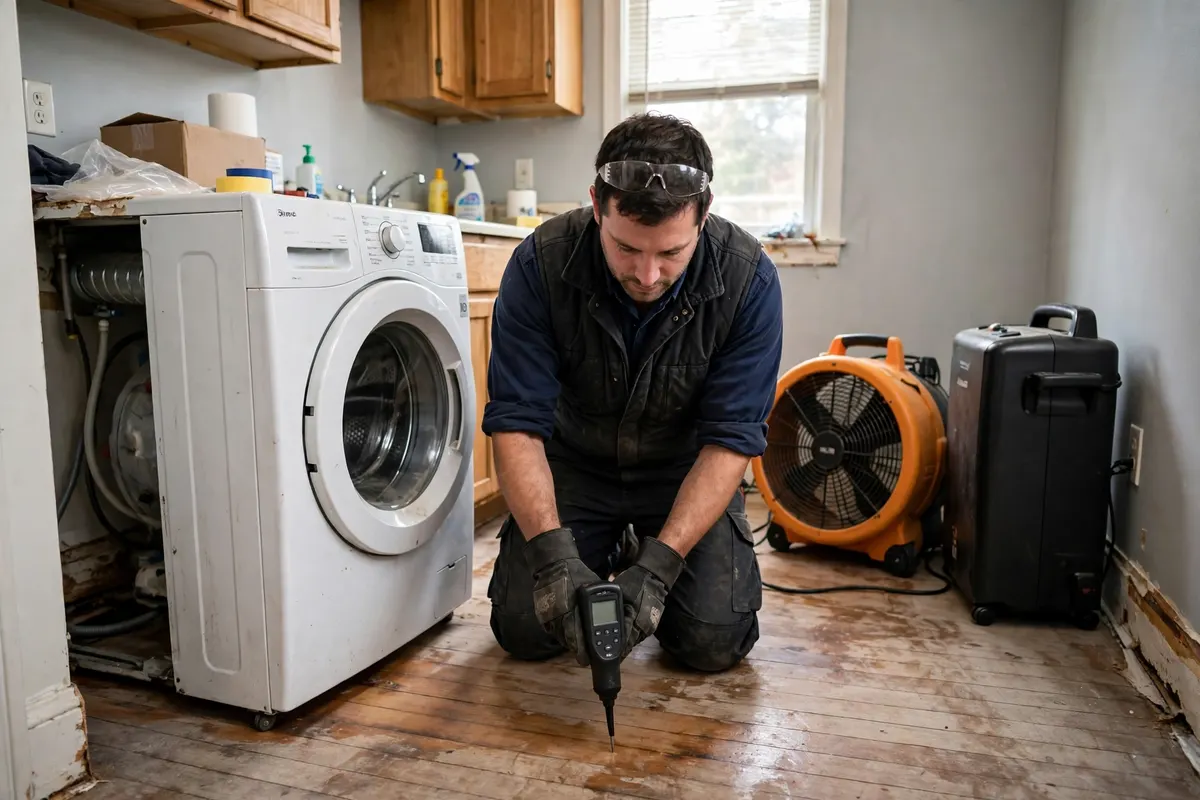
Drying a laundry room properly means getting air to the wet layers. That usually means pulling the washing machine out from the wall so the space behind and under it can be reached, and lifting the baseboards so air can move along the wall base. Air movers and dehumidifiers do the drying, and a moisture meter reading is the only way to know when it is done: the wet materials need to read dry when compared against dry areas of the same home, and wood often needs to read below about 16 percent moisture before it counts as dry. The general rule from mold guidance is to dry water-damaged areas within 24 to 48 hours to slow mold growth — and a laundry room left alone rarely meets that, because the wet layers are sealed behind the machine, the baseboards, and the flooring.
Household fans alone will not do this job. Fans move air, but they do not remove moisture from it, so they dry a room far more slowly than air movers paired with dehumidifiers. If the leak was small, caught the same day, and the floor and walls are firm and dry to the touch, opening the door and running a fan and a dehumidifier for a day or two can be enough. If the wet area is large, the baseboards are swollen, the floor feels soft, or the leak ran for days before anyone noticed, the laundry room needs professional drying equipment and daily moisture checks until the readings come back dry. Wet drywall at the wall base and wet particleboard usually get replaced rather than dried, because they hold water against the framing and crumble once they have swollen.
When a washing machine leak needs professional drying
A mop-up is realistic for a small, clean-water spill caught the same day, on a hard floor, with firm walls underneath. Anything beyond that needs drying help first. Call for professional drying when any of these apply:
- The floor feels soft, spongy, or bouncy near the machine. The subfloor has taken on too much water to be trusted, and the wet area needs mapping with moisture meters.
- The baseboards or the wall base are swollen or crumbling. The wall material has soaked up water and will not dry back to its old shape.
- There is a musty smell. The material has stayed damp long enough for mold to start, and the wet area needs to be opened, dried, and checked.
- Water reached the room below. A stain on the ceiling under the laundry room means the water travelled through the floor, and the full extent needs mapping.
- You cannot find the source. A floor that keeps getting wet with no visible leak means the water is coming from behind the machine, and finding it takes moisture mapping, not guessing.
- The water is dirty or smells of sewage. A drain backup or sewage water needs different handling, more removal, and more drying time than clean water — it should not be mopped up like an ordinary spill.
Professional drying follows the same order as any water damage job: find and stop the source, map how far the water travelled, remove what cannot be saved, dry the structure with daily readings, and only then rebuild. That order is what keeps a laundry room repair from becoming a repeat job a few months later.
The repair, step by step — once the laundry room is dry
Only when three things are true should the repair begin: the washing machine leak has been fixed, the floor, walls, and subfloor are confirmed dry by moisture readings, and the remaining materials are still solid. Here is the order that makes the repair last:
- Remove what cannot be saved. Swollen baseboards, crumbling drywall at the wall base, and buckled or delaminated flooring come out. Wet insulation under the floor is removed at the same time.
- Check the subfloor and the framing. The subfloor and the joists under the laundry room are checked for dampness and damage before anything is closed up. This is the moment hidden damage shows up — a subfloor that looked fine from above can be soft underneath.
- Replace the damaged wall and floor parts. New drywall and baseboards go in, matched to the existing room, and the damaged flooring is replaced and blended into the rest of the room.
- Refit the machine and check the hoses. The washing machine goes back in only after the space behind it is dry, and the supply hose and drain hose connections are checked for leaks before the machine is pushed into place.
- Run a test load and watch the floor. Run one full load with the machine pulled out and the floor clear, and check for drips at the hoses, the valves, and the drain hose before the laundry room is put back together.
Allow drying time between steps, and keep the room ventilated while the work is going on. A repair that is rushed — new flooring over a damp subfloor, new drywall over a wet wall base — looks finished for a week and then shows the same swelling and smell again. The wait for dry readings is what makes the repair last.
Mistakes that make the damage come back
Most washing machine leaks that cause damage twice were not repaired badly — they were repaired in the wrong order. These are the mistakes that cause the repeat:
- Running the machine again to test it. The most common mistake. A test load on a machine that is still leaking sends more water into the same wet subfloor, and it hides the slow drip you were trying to find.
- Mopping the floor and stopping there. The open floor dries while the subfloor and the wall base stay wet. Weeks later the flooring swells, the smell returns, and the laundry room has to be opened up again.
- Pushing the machine back over a wet floor. The machine seals the wet space behind it, and the trapped moisture keeps working on the subfloor and the wall base where no air can reach it.
- Replacing the hose and ignoring the subfloor. Fixing the source is only half the job. If the subfloor is still wet, the new hose stops the leak but the old water keeps damaging the floor.
- Ignoring a small leak. A small drip from a supply hose is still a leak, and a slow leak keeps wetting the wall base and the subfloor the whole time it is left alone. A leak that is checked early is a small job; the same leak left for months is a rebuild.
What affects the repair also affects what the job involves, so it helps to know what shapes water damage restoration cost in Meridian before work starts. And if you are comparing options, our restoration services page lays out the full range of work, from water extraction and drying through to repairs.
When to call for help in Meridian
Call for help when the floor feels soft, when the baseboards are swollen, when there is a musty smell, when water reached the room below, or when you cannot find where the water is coming from. Those are the signs the job has moved past a mop-up and into drying work. A professional assessment gives you a realistic plan for your laundry room — not a guess, but a plan based on what the moisture readings actually show.
A washing machine leak is a message from the part of your laundry room you cannot see. Read it in order — safety first, then the source, then the drying, then the repair — and the damage stays gone. If you are facing a washing machine leak in your Meridian home, call Water Damage Restoration Meridian at +1 (208) 719-5681 and get the drying started — the sooner it starts, the sooner your laundry room is back to normal.