How long does water damage restoration take in Meridian
Drying a Meridian home after water damage often takes 3 to 5 days, but full restoration can take weeks. Here is the timeline, what slows it down, and when to call for help.
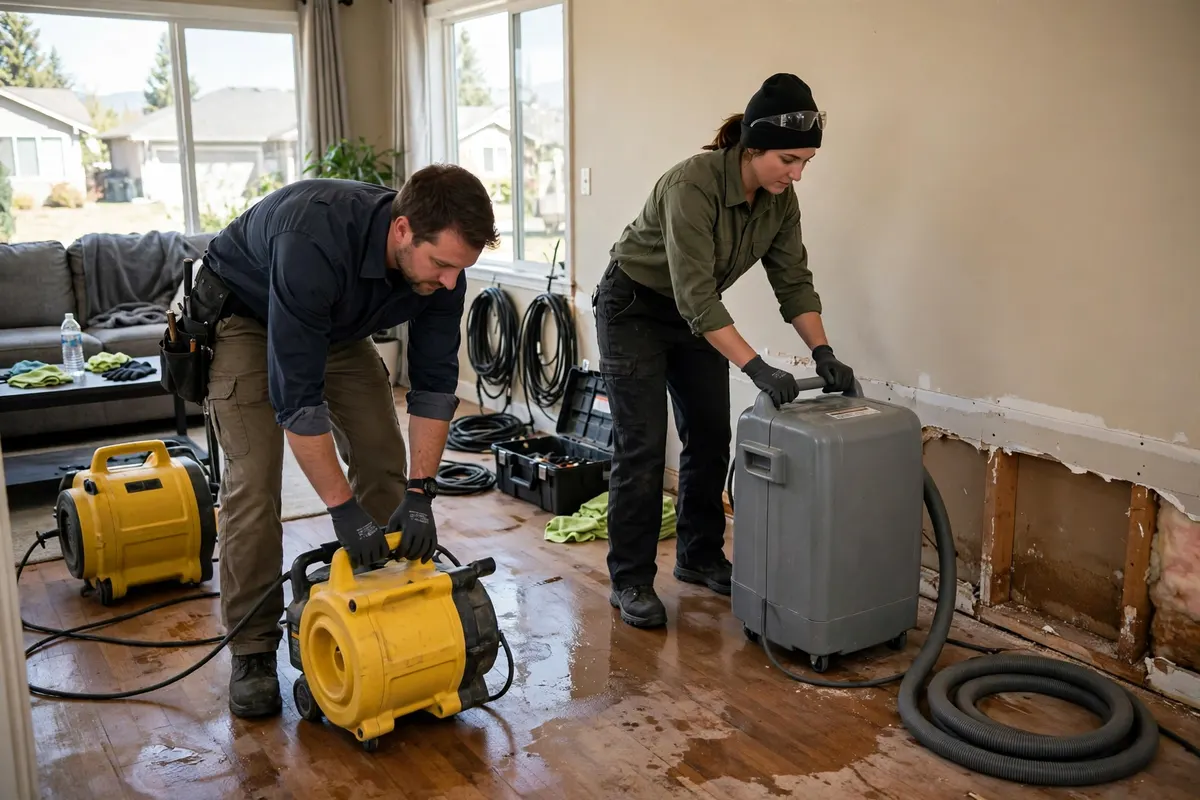
How long does water damage restoration take? It is the first question almost every Meridian homeowner asks once the water is under control — and it is a fair one. You want to know when your home will feel normal again, when the equipment will leave, and when the repairs will be finished. The short version: drying a typical clean-water loss often takes about 3 to 5 days, while the full job, from the first call to the finished rebuild, often runs 1 to 4 weeks. The longer version depends on what got wet, how much water there was, and how quickly drying started. This guide walks through the full water damage restoration in Meridian timeline, step by step, so you know what to expect and what can slow things down.
Every water loss is different, but most follow the same sequence: assessment, water extraction, structural drying, cleaning, and then repairs. Drying is the phase that decides most of the timeline. A small, clean-water loss in one room can be dried in a few days. A loss that soaked drywall, insulation, and hardwood floors — or sat unnoticed for days — takes longer, because water hides inside walls and under floors long after the surface feels dry. The sections below explain each phase, how long each one usually takes, and the choices that keep a job on schedule.
The short answer: how long does water damage restoration take?
For a typical Meridian home, here is the timeline most jobs fall into:
- Assessment and water extraction: day 1, usually within hours of the call.
- Structural drying: about 3 to 5 days for a clean-water loss in one or two rooms; a week or more for larger losses or dense materials.
- Removing materials that cannot be saved: 1 to 3 days, often while drying is still running.
- Cleaning and sanitizing: 1 to 2 days, often overlapping with the end of drying.
- Repairs and rebuilding: a few days for small repairs, up to several weeks when drywall, flooring, and cabinets need to be rebuilt.
Put together, a minor loss can be fully finished in 1 to 2 weeks, a moderate loss in 3 to 6 weeks, and a major loss involving several rooms, contaminated water, or mold in 6 weeks or more. The drying phase is the part you will notice most, because that is when air movers and dehumidifiers are running in your home. The rebuilding phase is the part that takes the longest on the calendar, because new drywall, flooring, and paint cannot start until everything underneath is confirmed dry.
The water damage restoration timeline, step by step
Restoration follows a set order, and each step protects the next one. Skipping a step — or rushing one — is how a job that should have taken a week turns into a problem that comes back months later. Here is what happens at each stage, and how long each stage usually takes.
Day 1: assessment and water extraction
The first visit is about stopping the damage from getting worse. A technician finds the water source and confirms it is stopped, checks for safety hazards such as sagging ceilings or water near electrical outlets, and maps how far the water travelled with moisture meters and, in many cases, a thermal camera. The water is then sorted by type: clean water from a supply line, grey water from a washing machine or dishwasher, or black water from sewage or flooding outside the home. That sorting matters, because contaminated water needs different handling and takes longer.
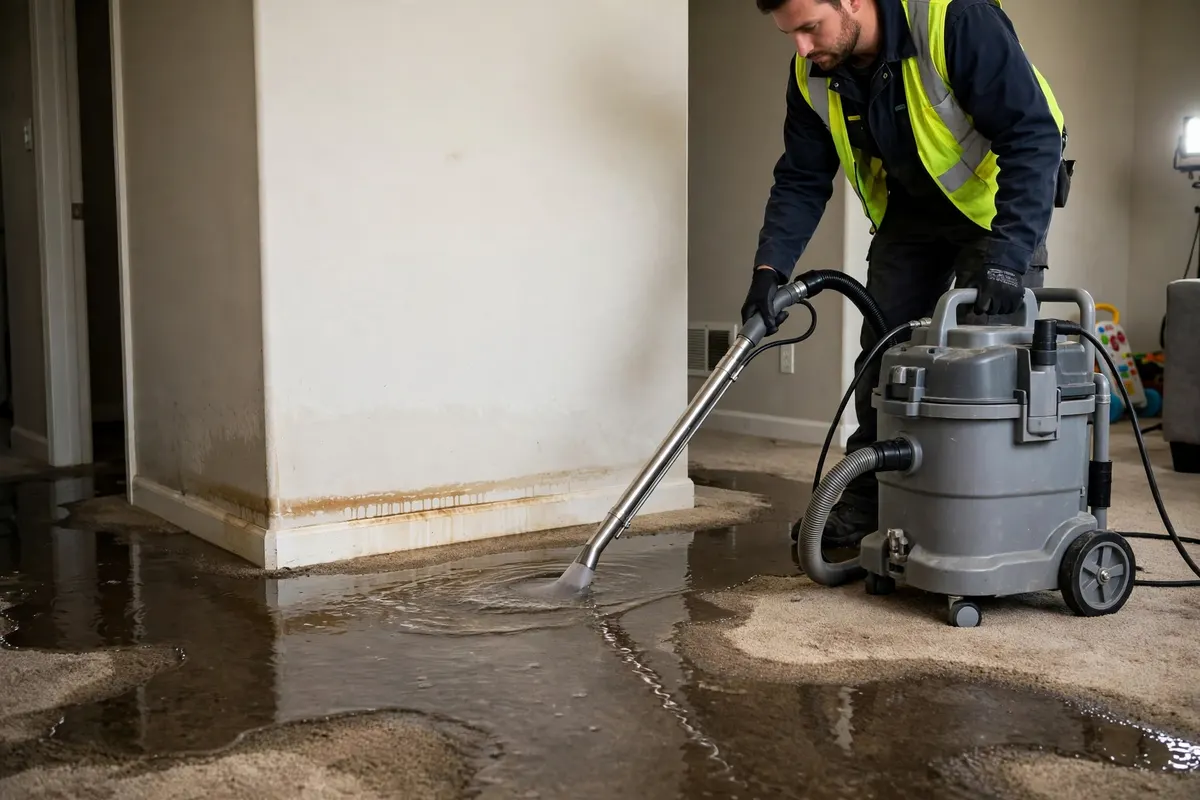
Once the assessment is done, standing water is removed with extraction equipment. For most homes this takes a few hours on the first day. Furniture and belongings are moved out of the wet area, and wet carpet, rugs, and soft items are lifted so the floor underneath can dry. The sooner extraction happens, the shorter the rest of the timeline — water that is pulled out on day 1 never gets the chance to soak deeper into wood and drywall.
Days 2 to 5: structural drying and daily moisture checks
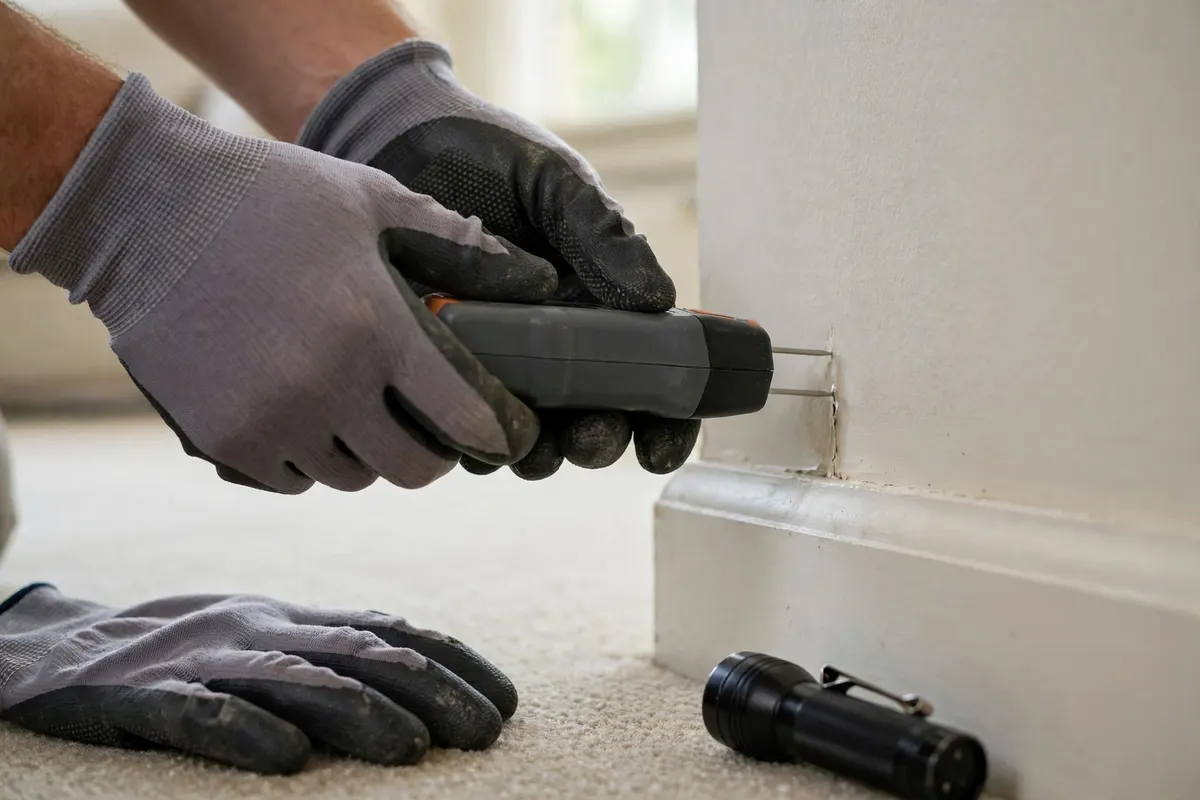
This is the longest hands-on phase for most jobs, and the one homeowners underestimate most. Air movers and dehumidifiers are placed around the wet area and run around the clock, pulling moisture out of walls, floors, and framing. A technician returns each day to take moisture readings and move equipment as the wettest spots shift. Drying is not finished when a wall feels dry to the touch — it is finished when moisture meter readings in the affected materials fall back to the dry readings taken from unaffected parts of the same home. As a rough guide, wood often needs to read below about 16 percent moisture before it counts as dry.
How long drying takes comes down to the materials. Drywall and carpet dry faster than solid hardwood, plaster, or concrete. A single room with clean water often dries in 3 to 5 days. A loss that soaked hardwood floors, a finished basement, or thick plaster walls can take a week or more, because dense materials release their moisture slowly. Meridian winters add their own wrinkle: cold air holds less moisture, and a home that is kept cool dries more slowly than a home kept at a normal, comfortable temperature, so keeping the heat on during drying helps the equipment do its job.
Days 3 to 7: removing materials that cannot be saved
Some materials cannot be dried back to a safe condition, and they are removed in a controlled way while drying is still running. Wet drywall is often cut away a short distance above the water line, soaked insulation is taken out, and carpet padding that has absorbed contaminated water is removed. This is also the stage where hidden damage shows up: a wall that looked fine from the outside can be wet inside, and the only way to dry the framing behind it is to open it up.
Removal usually takes 1 to 3 days, and it overlaps with drying rather than waiting for it. The aim is to take out only what has to go — a careful crew removes the wet section and leaves the dry sections in place, which keeps the rebuilding phase shorter and less disruptive. If you see baseboards and a strip of drywall missing at the bottom of a wall, that is normal: it is how air reaches the wall cavity so it can dry properly.
Cleaning and sanitizing
Once the water is out and the wet materials are removed, the remaining surfaces are cleaned and treated. Floors, wall framing, and hard surfaces are wiped down, and an antimicrobial treatment is applied where it is needed to slow mold growth on damp surfaces. Air scrubbers are sometimes used to filter the air while the work is going on. This stage usually takes 1 to 2 days and often overlaps with the last days of drying.
Cleaning is also when contents get attention. Furniture, rugs, and personal items that were moved out of the wet area are cleaned and dried separately, and items that cannot be saved are set aside and documented. Keeping a simple list of what was moved, cleaned, or discarded helps later, especially if you keep records for a claim — take photos of damaged items and rooms before anything is thrown away.
Week 2 and beyond: reconstruction
Reconstruction is the final phase, and it is where the calendar stretches. New insulation and drywall go in, floors are repaired or replaced, trim and baseboards are refitted, and everything is painted. Small repairs — a section of drywall and a coat of paint — can be finished in a few days. A job that needs new flooring through several rooms, rebuilt cabinets, or a full bathroom refit can take several weeks.
One rule governs this whole phase: rebuilding cannot start until drying is verified. Painting over damp drywall or laying new flooring on a damp subfloor traps moisture, and the damage comes back as bubbling paint, warped boards, or a musty smell a few months later. A crew that waits for dry readings before rebuilding is not being slow — that wait is what makes the repair last. If your job seems to pause between drying and rebuilding, that pause is usually the moisture readings catching up, not lost time.
What makes a water damage job take longer?
Five factors decide where your job falls in the range, and knowing them helps you read the timeline you are given. The first is the type of water. Clean water is the fastest to deal with. Grey water from appliances carries more contamination and needs more cleaning. Black water from sewage or outdoor flooding needs the most careful handling, more removal, and more drying time, and it is the type most likely to stretch a job by a week or more.
The second factor is how long the water sat before anyone noticed. A pipe that bursts while you are home and is shut off within the hour is a very different job from a slow leak behind a washing machine that has been wetting a wall for a month. The third is the size of the affected area: one room dries faster than three rooms, and a finished basement with carpet, drywall, and furniture takes longer than an unfinished space with a concrete floor.
The fourth factor is the materials. Carpet and drywall give up moisture quickly. Hardwood floors, plaster walls, and concrete slabs hold it and release it slowly, and they can add several days to drying. The fifth is timing: the longer the gap between the water arriving and the drying equipment starting, the longer the job. Mold can begin growing on wet organic material within a day or two in warm, damp conditions, and once it starts, the job grows — the affected area has to be handled before rebuilding can begin. That is why the first day matters more than any other day in the whole timeline.
How long do walls, floors, and carpet take to dry?
Not all materials dry at the same speed, and this is where most homeowners are surprised. The surface can feel dry while the inside is still wet, so the times below are for full drying with professional equipment, not for how long it takes a surface to feel dry to the touch:
- Drywall: often 3 to 5 days when only the lower section is wet; longer if the whole wall cavity is soaked or the wall is plaster.
- Carpet and padding: carpet itself can dry in 1 to 3 days, but soaked padding underneath often has to be removed rather than dried.
- Hardwood floors: often 7 to 10 days or more, because water soaks deep into the boards and they release it slowly.
- Concrete and tile floors: tile dries quickly, but a concrete slab underneath can hold moisture for a week or longer.
- Insulation inside walls: fiberglass can sometimes be dried in place, but soaked insulation is usually removed, because it holds water against the framing.
The practical point is simple: do not judge dryness by touch. A wall that feels dry on the outside can still read wet inside, and that hidden moisture is what causes paint to bubble and odors to return weeks later. Moisture meter readings, compared against dry areas of the same home, are the real test — and they are the reason daily checks matter during the drying phase.
Can you stay in your home during water damage restoration?
In many cases, yes. If the damage is limited to one room, the water is clean, and the drying equipment is set up in that room, most people stay in the home and simply avoid the work area. The equipment is noisy — air movers sound like strong fans running all day and night — so light sleepers sometimes choose to sleep in a room farther from the work, but staying is usually possible.
There are times when leaving is the wiser choice. If the water is sewage or floodwater from outside, if several rooms are affected, if there is a strong odor, or if someone in the home has breathing problems or a weakened immune system, staying elsewhere while the wettest work is done is worth considering. Ask the crew what they recommend for your specific situation, and plan around the noisiest days — the first few days of drying — rather than the whole job. Most of the rebuilding phase is ordinary construction noise, not round-the-clock equipment.
Three mistakes that stretch the timeline
The first mistake is turning the drying equipment off. It is tempting — the machines are loud, they use power, and the room feels dry after a day or two. But turning them off before the moisture readings are back to dry stops the drying halfway, and the moisture left inside the walls has to be dried all over again. Equipment that runs without a break finishes the job sooner than equipment that is switched off at night and restarted in the morning.
The second mistake is covering up dampness instead of drying it. Painting over a water stain, laying new flooring over a damp subfloor, or putting furniture back against a wall that has not been checked only hides the problem. The moisture stays, and it shows up later as peeling paint, cupped floorboards, or a musty smell that will not go away. The repair that looks finished too soon is often the repair that has to be done twice.
The third mistake is waiting to act. A small leak that is left for a week becomes a bigger job than the same leak handled on day 1, because water keeps travelling through drywall, under floors, and into framing the whole time it is left alone. If you see a stain, a soft spot, or a musty smell, getting the area checked sooner rather than later is the single easiest way to keep the timeline short — and our guide to detecting hidden water damage explains the early signs worth checking for in a Meridian home.
How to keep your restoration on schedule
Homeowners can do a few simple things that genuinely help the timeline. First, keep the equipment running and give it clear air: do not stack boxes against air movers or close the doors that the crew has left open for airflow. Second, keep the home at a normal, comfortable temperature — warm air holds more moisture, which helps dehumidifiers pull water out of the air and out of the materials.
Third, keep good records from day 1. Photos of every wet room, a list of damaged items, and the dates of each visit help everyone stay on the same page, and they make any claim paperwork far easier later. Fourth, make decisions about finishes early. The most common delay in the rebuilding phase is not the work itself — it is waiting for a homeowner to choose flooring, paint colors, or fixtures. If you know what you want the finished room to look like, say so early, and the materials can be ordered while drying is still running. Structural drying is the phase where most of the waiting happens, so understanding it helps you plan around it.
When to call a professional in Meridian
Call for help when the water covers more than a small area, when it has soaked into walls or floors, when it smells bad, or when you are not sure where it came from. Emergency water damage restoration covers the first-day work — stopping the water, removing what is standing, and starting the drying — and that first day sets the length of everything that follows. Standing water should not sit overnight if it can be helped: every hour it sits is an hour it soaks deeper.
What affects the timeline also affects what the job involves, so it helps to know what shapes water damage restoration cost in Meridian before work starts. And if you are comparing options, our restoration services page lays out the full range of work, from water extraction and drying through to repairs. A professional assessment on day 1 gives you a realistic timeline for your home — not a guess, but a plan based on what the moisture readings actually show.
Water damage is stressful, and the waiting is the hardest part. But the timeline is not a mystery: assessment and extraction on day 1, drying over the next few days with daily checks, removal and cleaning as needed, and rebuilding only once everything is confirmed dry. If you are facing water damage in your Meridian home, call Water Damage Restoration Meridian at +1 (208) 719-5681 and get the drying started — the sooner it starts, the sooner your home is back to normal.